
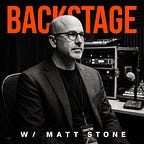

Matt traces his relationship with media back to its root. As a kid he turned everything into a microphone, pretending to be a talk show host; in junior high he and his friend David recorded fake radio shows on a brick of a tape recorder, complete with invented commercial breaks. That thread runs straight through to his first podcast, Connections That Matter, where every guest told him some version of “I learned so much about myself through this,” and onward to the solo-mic format he’s speaking into now. The point isn’t nostalgia. It’s that there are countless kinds of stages, and he’s spent his life getting to know the medium well enough to know that.
Which sets up the reframe: growth for growth’s sake isn’t the point. A hundred people who are genuinely all in on you beats ten thousand who clicked subscribe and forgot — the TikTok sugar high gives broad, fleeting exposure without the long-term satiation, like a bad diet. So Matt has changed how he works: the first three months with a client now go to three questions — what are your real objectives, what’s your core story (backstory, origin, the story now), and what do the stages that actually make you happy look like? Because a stage doesn’t have to be a Tony-Robbins stadium with twenty thousand people walking on fire. It can be twelve people in a circle, an improv session that spills into Central Park, an outdoor adventure, a curated room in your own town, or a special online space you build from scratch. If the one you want doesn’t exist where you are, that’s not a dead end — it’s your opening to build it. He extends the same invitation to founders and CEOs: in a low-trust world, people crave real engagement and access, so what stage could you create where your clients, employees, and stakeholders actually feel seen? The closing prompt: if you had no rules, what would your stage look like?


